Costs
Part of A Practical Method for Building Ethics Training Programs
Ethics training programs examples: eight interventions and what they taught
Eight ethics training interventions, from Siemens to the FBI, with what each tried, what it produced, and the design lesson a compliance team can reuse.
What to take away
Eight ethics training program examples, named and dated, from Siemens to Johnson & Johnson's Credo.
- Siemens rebuilt its compliance function after a $1.6 billion FCPA settlement in 2008, and the training that followed was one part of a system, not the system.
- The FBI's ethics program runs on facilitated scenario discussion at Quantico, not on completion rates.
- Lockheed Martin's ethics officer role and open reporting line predate most of the industry's current tooling.
- The Manhattan Project's security training showed that secrecy and ethics training pull against each other, and secrecy usually wins.
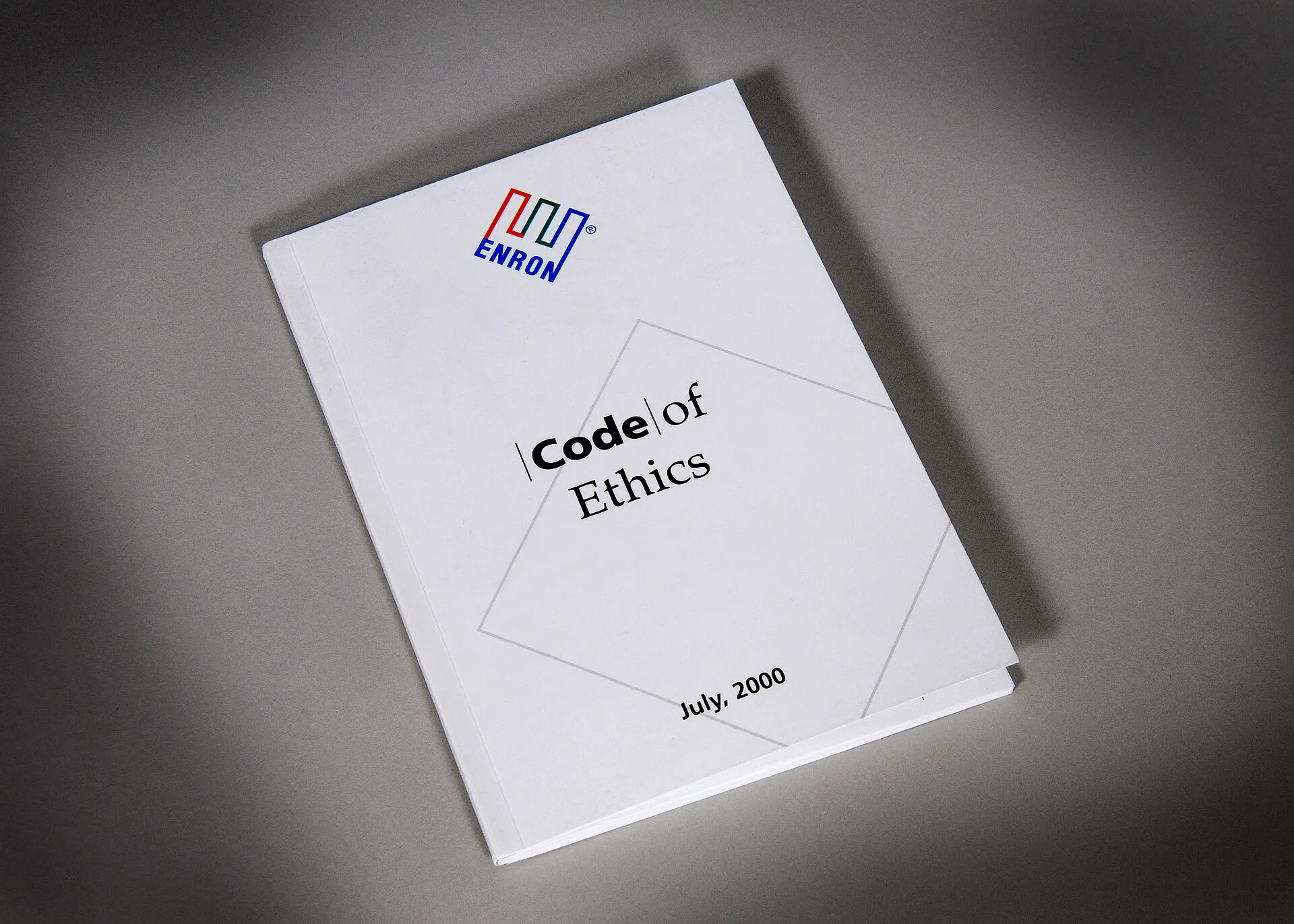
- Enron's board waived its own 64-page code of ethics for its CFO, twice, before the December 2001 bankruptcy.
- Volkswagen trained everyone on the same code, then pleaded guilty in 2017 and paid $4.3 billion in U.S. penalties.
- Wells Fargo had a values statement and an ethics line while employees opened about 3.5 million unauthorized accounts.
- The cheapest interventions on this list are the ones that changed what people could describe a year later.
What worked
Siemens: training after a system failure
Siemens paid about $1.6 billion in 2008 to settle FCPA charges with the U.S. Department of Justice and the SEC, plus a separate settlement with authorities in Munich. The misconduct ran from bribery in Argentina and Venezuela to slush funds used across multiple regions.
The training that followed was not a course. Siemens rebuilt the compliance function, separated it from the legal department, gave the compliance officer a reporting line to the audit committee, and then trained against that structure. Employees learned the reporting route because the route existed and had been used.
Why it worked: the training described a system that was already operating. A course about a reporting line nobody has used teaches people that the line is decorative. Confirm your own reporting structure with counsel before you build training around it.
The FBI: scenario discussion over completion rates
The FBI's ethics program, documented in academic case studies of federal ethics training, uses facilitated discussion of real scenarios rather than lecture or e-learning. New agents work through situations in small groups at the FBI Academy in Quantico, Virginia, with a facilitator who does not supply the answer until the group has committed to one.
The design choice is deliberate. A quiz tests whether the right answer is identifiable among four options. A facilitated scenario tests whether the person can produce the reasoning under mild social pressure, which is closer to the actual task.
Federal rules push the same way. The Ethics in Government Act requires annual ethics training for employees who file public financial disclosure reports, and the Office of Government Ethics sets the standards in 5 C.F.R. Part 2635.
Why it worked: practice, not exposure. The cost is facilitator time and a case bank. For a private-sector version of the same structure, see this site's checklist for these programs.
Lockheed Martin: the ethics officer as a named person
Lockheed Martin has run a formal ethics program since the 1980s, with a named ethics officer, a reporting line that reaches the board, and an open channel employees can use without going through their manager. The program predates most of the current compliance software market.
The company code of conduct is titled "Setting the Standard." Lockheed Martin also belongs to the Defense Industry Initiative on Business Ethics and Conduct, founded in 1986 by 32 defense contractors after the Packard Commission. Members commit to written codes, training and a reporting mechanism.
The training element is modest by current standards. What carries it is that employees can name the ethics officer and know the channel works, because the company publishes case outcomes internally.
Why it worked: the channel is real and visible. Training that points at a channel nobody has seen used is a slide. Training that points at a channel with a published outcome record is a route.
The Manhattan Project: what secrecy does to ethics training
The Manhattan Project ran mandatory security training alongside its scientific work, and the record, including the Smyth Report of 1945 and later declassified material, shows the two objectives pulling against each other. Scientists were told to discuss their work with no one, then asked to reason about the consequences of that work in groups.
Most resolved the tension by treating security as the real rule and ethics as the formal one. The pattern repeats in any organization where confidentiality and speak-up training are delivered by different functions with different incentives.
There is a counterexample in the same record. The Franck Report of June 1945, signed by James Franck and other scientists in Chicago, argued for a demonstration of the bomb before military use. The debate happened inside the project, and it did not change the decision.
Why it worked, in the sense of teaching something: when two training messages conflict, people follow the one with consequences attached. When your confidentiality policy and your speak-up policy point in different directions, employees read the consequences and choose.
What did not
Enron: the code of ethics and the acknowledgment form
A format nearly every large employer has run: a written code, a completion requirement, an acknowledgment form, and a pass mark most people meet first try. Enron distributed a 64-page code of ethics that employees were expected to follow. It filed for bankruptcy on December 2, 2001.
Three interventions that failed
Annual video with quiz
- Cost
- Large
- What it produced
- A completion rate
- Why it failed
- Recognition is not recall
All-hands with counsel
- Cost
- An hour of everyone's time
- What it produced
- Accuracy nobody could apply
- Why it failed
- No segmentation
Anonymous scenario survey
- Cost
- Small
- What it produced
- Reassurance that was wrong
- Why it failed
- Measured what people should say
The board's special committee report of February 2002 found that the directors had waived the code for the chief financial officer in 1999 and again in 2000, so he could run the partnerships that later sank the company. The acknowledgment form had been signed anyway.
Two weeks after signing one, a sample of employees typically cannot describe what to do if a manager instructs them to do something the code forbids. The code covered it. Recognition is not recall, and a four-option quiz is not the task anyone faces.
Why it failed: the metric measured attendance, not capability. If your board asks for a training number, give them the number and say what it does not measure.
Volkswagen: the code delivered to everyone at once
An hour, legally accurate, delivered to everyone at once, covering the full code. People remember that it was thorough. Almost nobody can say what applied to their own work, because most of it did not.
Volkswagen's compliance materials were company-wide. In September 2015 the EPA issued a notice of violation over software that defeated emissions tests in about 11 million diesel vehicles worldwide. The company pleaded guilty in 2017 to three criminal counts and agreed to $4.3 billion in U.S. penalties, with a three-year independent monitor.
Why it failed: no segmentation. An hour covering everything gives each person a few minutes about their own exposure, and they cannot tell which minutes those were. Split by function and by the decisions that function actually makes.
Wells Fargo: the survey that measured the wrong thing
A survey asking people what they would do in various situations is meant to measure culture. Participation is high. Results are reassuring. They bear no relationship to what the reporting channel receives.
Wells Fargo shows the gap. Employees opened about 3.5 million deposit and credit card accounts without customer authorization, according to the bank's own review and later federal filings.
The bank had a values statement and an ethics line. It paid $185 million to the CFPB, the OCC and the Los Angeles City Attorney in 2016, then $3 billion to the DOJ and the SEC in 2020. The Federal Reserve capped its asset growth in 2018.
Why it failed: it measured what people knew they were supposed to say. A scenario with visible good answers tests reading comprehension. The same question asked in a conversation, in the person's own words, with a follow-up, produces something usable. The reasoning vocabulary those conversations rely on is in an introduction to ethical decision making and ethical frameworks.
The one that worked by accident: Johnson & Johnson's Credo
Johnson & Johnson's Credo dates to 1943, when Robert Wood Johnson II wrote it. In the late 1970s the company began holding Credo Challenge sessions, in which managers were asked to say out loud whether the company lived up to the document, including its promises to employees and communities.
In 1982, seven deaths in the Chicago area were traced to Tylenol capsules laced with cyanide. The company recalled about 31 million bottles and returned the product in tamper-resistant packaging within months, a response it has tied to the Credo ever since.
The same mechanism turns a routine session into a story people repeat. A manager was delivering one when someone asked whether the approval rule applied to a director who had approved something outside policy the previous month.
She did not know. She said so, wrote it down, and came back a week later with the answer: it did apply, the approval had been wrong, and it was being reversed.
The story spread further than any session had. People cited it for a year. One honest answer about a specific senior person did more than the entire curriculum, which is a lesson about what people are actually watching. The mechanism is set out in leadership ethics, and the reason it outweighs the training is in ethics training programs.
The pattern
| Program | Cost | What it taught |
|---|---|---|
| Siemens compliance rebuild (2008) | About $1.6 billion in settlements; program costs not public | Training can only describe a system that already runs |
| FBI facilitated scenarios at Quantico | Facilitator time; a two-hour session for 12 people typically runs $500 to $1,500 in staff time | Reasoning under social pressure |
| Lockheed Martin ethics office and hotline | A named officer; outsourced hotlines typically run $2,000 to $20,000 a year by headcount | A route people have seen used |
| Manhattan Project security training | Mandatory hours | Conflicting messages are settled by consequences |
| Enron code and acknowledgment form | Printing and about an hour of staff time per person | A completion rate, not recall |
| Volkswagen company-wide code training | Part of a $4.3 billion U.S. penalty and a three-year monitor | Accuracy nobody could apply |
| Wells Fargo values statement and culture surveys | $185 million (2016); $3 billion (2020) | Reassurance that was wrong |
| Johnson & Johnson Credo Challenge sessions | Staff time; no outside vendor | An honest answer about a senior person |
The cheapest items on this list are the ones that changed what people could describe a year later. Specificity and evidence move behavior, and both are cheap. Production values substitute for neither. What the person in a case is weighing is covered in employee ethics.
Cost against what each produced
Intervention
- Fifteen-minute team case
- Minutes
- Manager pack
- A page per manager
- Case after an incident
- An hour
- Pre-pressure session
- An hour, well timed
- Video with a quiz
- Large
- All-hands with counsel
- An hour of everyone's time
- Scenario survey
- Small
- An honest answer about a senior person
- Nothing
Cost
- Fifteen-minute team case
- Practice, and memory that lasted
- Manager pack
- Ownership, and two rule corrections
- Case after an incident
- The program's best material, and questions
- Pre-pressure session
- Two concerns raised that otherwise would not have been
- Video with a quiz
- A completion rate
- All-hands with counsel
- Accuracy nobody could apply
- Scenario survey
- Reassurance that was wrong
- An honest answer about a senior person
- More than all of the above
What it produced
- Fifteen-minute team case
- Manager pack
- Case after an incident
- Pre-pressure session
- Video with a quiz
- All-hands with counsel
- Scenario survey
- An honest answer about a senior person
When a session teaches people to use a reporting route, the protection it carries is a matter of law, not curriculum. Regimes like the UK's whistleblowing framework show one shape this takes.
The UK's Public Interest Disclosure Act 1998 covers workers who make protected disclosures, and the EU's Whistleblower Protection Directive gave member states until December 2021 to write its rules into national law. Whistleblower distress and retaliation trauma are clinical matters; refer to a licensed clinician or your employee assistance program, not to a training module.
Common questions
Can we use cases from other organizations?
As a starting point while you build your own, yes. People discount a case that is obviously not about them, and the discount is larger than most designers expect. A Siemens case teaches the structure of a system; it does not teach your team what to do on Thursday.
How do we run a post-incident case without blaming anyone?
Anonymize, remove the outcome, and say at the start that the session is about the decision and that the people involved acted on what they knew. If the organization cannot do that honestly, it is not ready to run the case. Blame in the room ends the discussion you came for.
What if a manager disagrees with the rule they are delivering?
Better to know. Ask them to state the rule and their disagreement separately, then take the disagreement to whoever owns the rule. A rule its deliverers do not believe will not survive contact with pressure, and the disagreement is data about the rule, not about the manager.
Does naming a real program mean we can claim compliance?
No. Naming Siemens, the FBI or Johnson & Johnson describes what those organizations did. Whether your program satisfies the DOJ, the SEC, the Office of Special Counsel or any other authority depends on that authority's published guidance and on your facts.
The DOJ's Evaluation of Corporate Compliance Programs, updated in 2023, asks whether training reaches the right employees and how the company measures whether it worked. Confirm with qualified counsel in the relevant jurisdiction.